

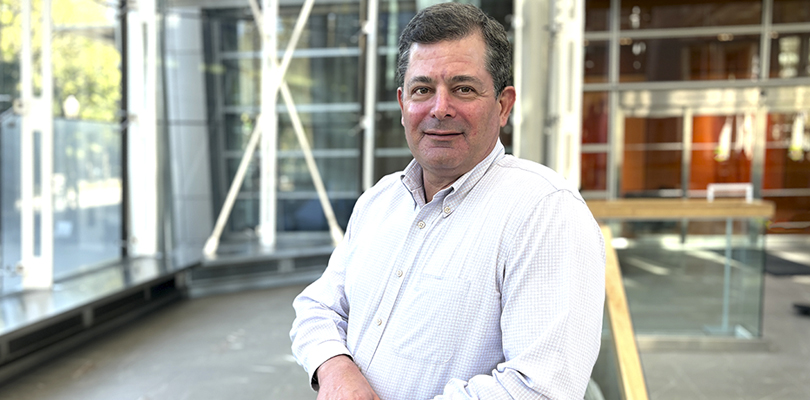
Vonderhaar is a 10-year Sacramento County Sheriff’s Search and Rescue volunteer on top of his day job at the CalPERS Investment Office. He’s always loved being outdoors, and when he moved to Sacramento in 2014 for a job at Franklin Templeton, he found a way to combine that passion with giving back to his new community.
“I’ve always loved hiking and fishing, and I when I came across this organization online, I thought, ‘Well this is something I can do—I’m fit enough for it and it’s always a good excuse to buy more gear,’” Vonderhaar said.
That gear includes a 20-pound “go bag” tucked inside a closet near his front door, containing a first aid kit, hiking boots, and a host of outdoor gear including duct tape, a headlamp, and communications radio.
“Working in search and rescue requires immediate physical action,” Vonderhaar said. “We move fast without having the full picture and make adjustments on the fly, whereas in private equity, we do an extensive amount of due diligence before making any financial commitments.”
Trained ‘so you don’t miss anything’
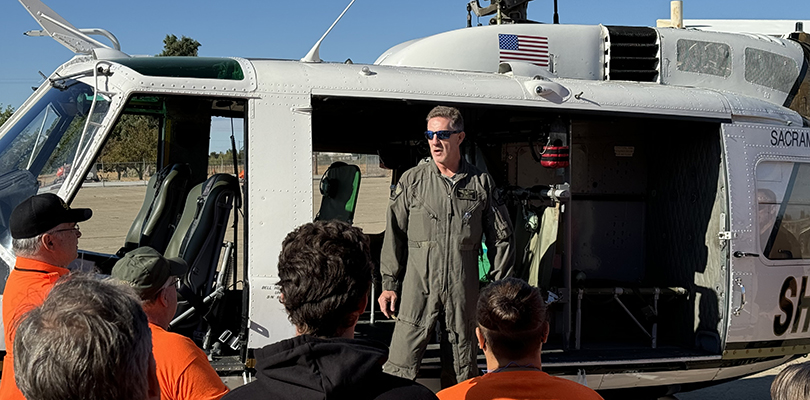
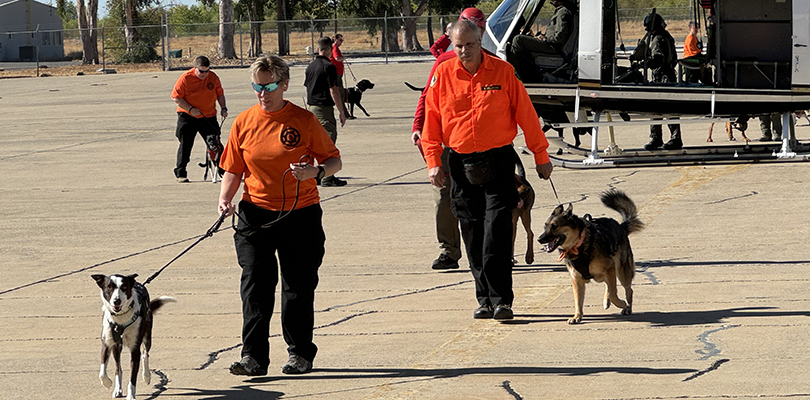
Sacramento Search and Rescue includes about 45 trained volunteers—and their canines—who assist the Sacramento County Sheriff’s Office in cases of missing people, or in some cases, responding to large-scale disasters. They’re on call 24 hours a day and participate in monthly trainings, from crime scene preservation to land navigation using a map and compass.
What you see on TV, Vonderhaar said, doesn’t fully reflect the realities of searching thoroughly not just for a person, but any object in an urban area, open field, or forested terrain.
“What’s on TV is what’s most interesting to viewers, like the search team that locates the missing person or initiates the rescue and exfiltration—and if it’s really exciting, by helicopter,” he said. “In reality, you’re more likely to be on the team that doesn’t find the missing person, simply because there are many more teams searching their assigned areas as part of the larger effort, and obviously—if found—the missing person will only be in one of those areas.
“You need to be trained well enough to make sure the search is done right so you don’t miss anything,” he said.
Searching elbow-to-elbow
Doing the search right involves working closely with a team. This team will walk virtually elbow-to-elbow through an assigned search area to ensure that no tiny clues are overlooked.
“If I’m looking for an object the size of a dime, such as jewelry, cigarette butts, or anything else that doesn’t naturally occur in the environment, I’ll drop a dime in the area and step away so many steps to where I can still see it,” Vonderhaar said. “And then I know I can’t be any farther away from my partner than that during the search—that’s how we determine the spacing of the search line.”
The outcomes of some searches are positive, meaning the missing person is found alive, while others are not, and the best outcome is in preserving the scene to support law enforcements’ next steps.
The search and rescue group also uses topography software to digitally track volunteers’ movements using their cell phones’ GPS. Working closely with missing persons detectives, volunteers can point to the area searched to determine where else needs eyes.
“The detectives can then go back to the family and say, ‘I can show you a map, and each one of these different colored lines represents somebody out looking for your loved one.’
“They can actually show how we are making the maximum effort, which we’ve been told many of the families really appreciate.”
Doing his best in both worlds
Vonderhaar is equally dedicated to being a search and rescue volunteer and a CalPERS Investments Office team member. And it’s a long way from where he began his career on the trading side of the financial world in Chicago.
“I even spent time on the Chicago Mercantile Exchange trading floor—that scene in Ferris Bueller’s Day Off was a real thing, and that was me down in the midst of all that chaos,” he said.
While his day job and volunteer efforts are different in obvious ways, the skills are transferrable. “There’s a certain dedication to doing the best you can in both worlds,” he said. “The search and rescue volunteering pushes me to do better myself and to be capable of doing what I say I can.
“You never know when you’re going to use your CPR or first aid training, and it could make the difference between life and death. And in the CalPERS Investment Office, I genuinely care about the people for whom we’re providing a living after retirement.”
Learn more and get involved
Your local search and rescue: Search and rescue in California is the responsibility of each county’s sheriff’s office, except within certain national parks. To learn more about volunteering for search and rescue, visit your local sheriff’s office or search and rescue team website, or CalOES for state search and rescue resource teams.
CalPERS members who volunteer: Learn more about CalPERS members who volunteer their time in their communities.
Sacramento Search and Rescue: Get involved with the Sacramento Search and Rescue by volunteering your time or donating to support the organization.
Share your story: If you’d like to share your volunteer story to be considered in a future article, email us at editor@calpers.ca.gov.