


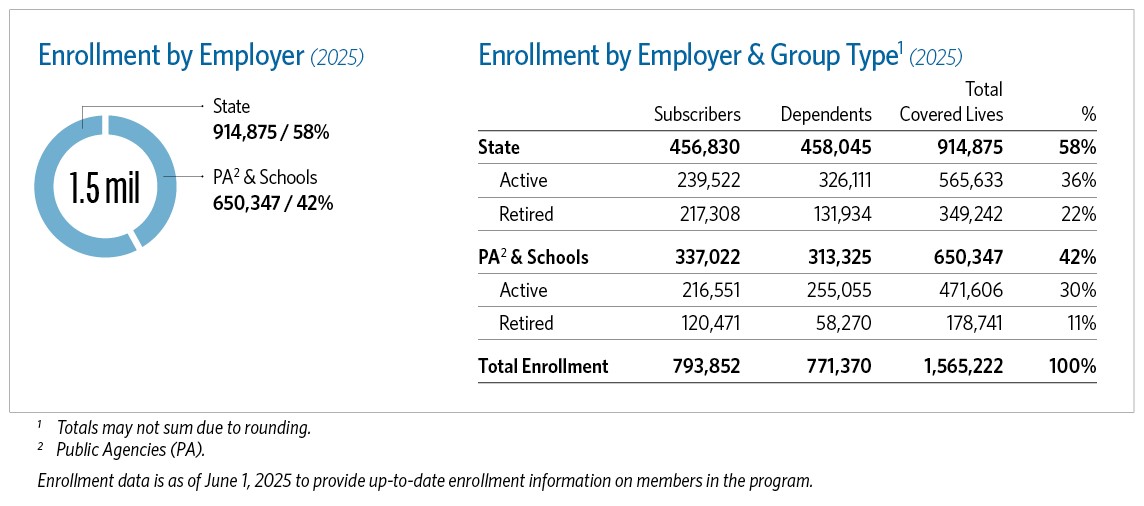
As the second-largest commercial purchaser of healthcare in the nation, we’re using our power in the market to push for new ways to contain costs while providing better patient care for our more than 1.5 million members receiving health benefits.
Increasingly, we require that our contracts with healthcare partners include provisions linking financial compensation to improved health outcomes and lower costs.
Our innovative approaches have drawn attention from lawmakers. Last fall, CalPERS leadership was invited to the U.S. Senate Committee on Aging to share our story.
“There is no one-size-fits all solution for rising healthcare costs,” said Chief Health Director Don Moulds in his testimony. “The cost-driving challenges are multifaceted. So too must be the solutions.”
Since 1962, CalPERS has provided health benefits to public sector employees and their families. Our program contracts with nearly 1,200 public agencies ranging from the state and local government to schools and special districts. Both our members and contracting agencies help pay for their healthcare. That’s why we explore opportunities to innovate and share our findings on a national stage.
An active approach to innovation
One approach we use is called “reference-based pricing.” In these programs, we identify common procedures with different costs depending on where members go, set a consistent price for them, and select high-quality, participating providers. Members can still choose where they get the procedure but will pay more if they do not use one of those providers.
In 2011, we began a reference pricing program as a way to address disparities in what healthcare providers charge for hip and knee replacements. Today, our approach includes nearly 20 different medical procedures, saves millions of dollars annually, and patients experience fewer complications.
In 2024, we launched a lab incentive program that waives PPO member out-of-pocket costs at two common, independent lab providers. The goal was to steer lab tests away from hospitals, which often charge more than ten times as much as independent labs for the same tests.
Achieving savings and quality care through health contracts
Between 2023 and 2025, we secured new contracts for health and pharmacy services that make sure our partners have a stake in keeping members healthy and containing costs.
One example is the five-year contracts CalPERS awarded in 2024 to Blue Shield of California and Included Health for our preferred provider organization (PPO) plans.
The contracts contain cost guarantees that tie the money we pay the health plan to how well they manage overall costs each year. This means that if costs come in higher than agreed, these guarantees kick in, and a financial penalty is paid to us by our partners. With a similar tool in place to reward high quality, this represents a combined $464 million on the line for Blue Shield and Included Health.
Starting this year, CalPERS also began a new contract with CVS Caremark (CVS) to provide pharmacy benefits for certain health plans. Aligned with our other plans, this contract ties dollars to quality measures and ultimately the health outcomes of our members — a first for the pharmacy benefits industry. Combined with the contract’s guarantee on cost, CVS agreed to put $250 million at risk should they not meet quality or cost targets.
Custom solutions for a national problem
The premiums we post each July are only part of the larger picture of healthcare costs rising across the country. Premiums for federal employees are expected to increase by an average of 12% in 2026. Affordable Care Act (ACA) exchanges are expecting about a 26% increase, which will be even higher for many enrollees with the end of enhanced tax credits. CalPERS’ overall premiums rose by 8.21%.
In his October testimony, Moulds highlighted the additional need for increased competition and transparency in the healthcare market to help reduce costs. By advocating for these priorities, securing strong contracts, and innovating our own program, he said, “CalPERS aims to create a model that can serve as a blueprint for purchasers across the nation.”